
Chanterelles taste like firm mushrooms with a hint of apricot aroma. They are meaty and chewty. The classic French way to cook them is simply trimmed and sauteed whole in a pan.
Cleaning: This can be a chore. Chanterelles grow exuberantly. The cap margins fold tightly to form crevices from which it is difficult to dislodge debris.
The caps grow around twigs and brambles. Sometimes it is necessary to section portions of larger specimens to get at the foreign material. Use a toothbrush or a nylon mushroom brush to whisk away any surface material. In order to clean small particles of sand or dirt caught between the rounded gills, you must brush them under a slowly running faucet. Do not soak them. In general, the less water the better. Drain them on paper towels. They keep well if allowed to remain in a waxed paper or brown paper bag in the refrigerator until they are cleaned. However, cleaned chanterelles may also be stored in the refrigerator for a few days. They should be loosely arranged in a bowl lined with cloth or paper towels and covered lightly with towels.
Cooking: Cut them into hunks of a generous size, so that the maximum amount of flavor can be appreciated. Chanterelles are meaty and chewy. One of the best ways to cook them is to slice and sauté them in butter. Cream or half and half and chicken broth are good additions. Chanterelles bake well and retain their flavor after long cooking. Eggs, chicken, pork, and veal harmonize beautifully with them.
After trying many recipes, we still prefer to cook chanterelles by baking them for 20 minutes in chicken broth with coarsely chopped onions. Serve this over rice or pasta. Potatoes will overpower the chanterelle flavor, as will many other vegetables.
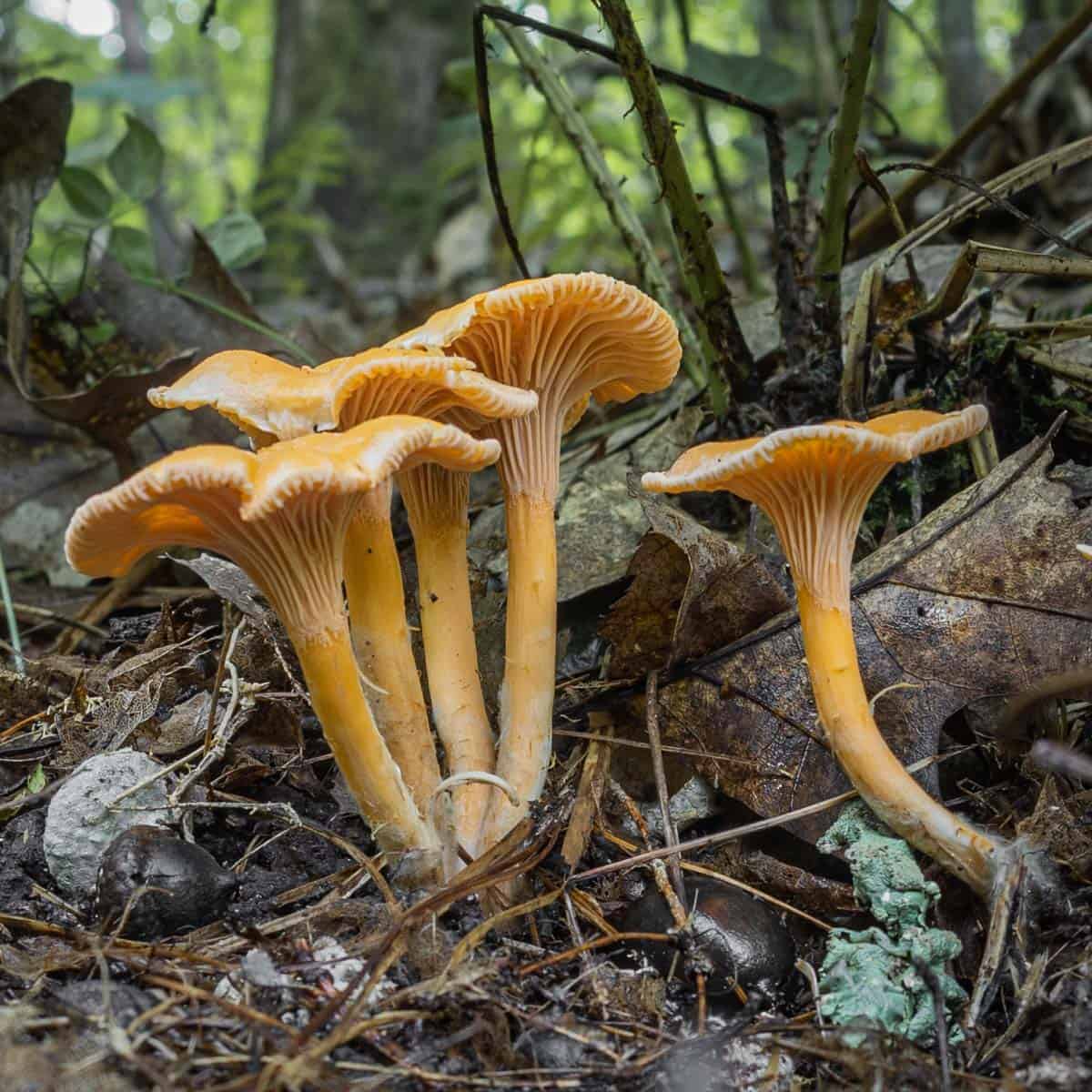
C. spectaculus
Spectacular Chanterelle (Cantharellus spectaculus)
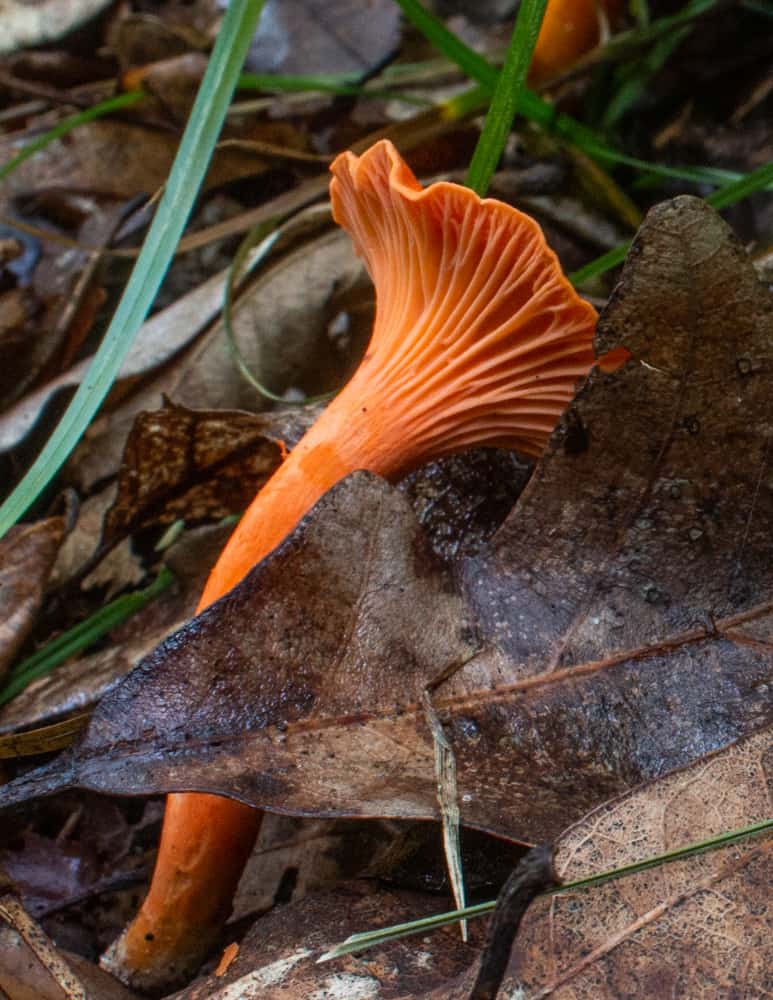
Identified in 2013, this species found in the Midwest has a noticeably long stem, grows with hardwood trees (red oak), and can be confused with winter chanterelles at a glance. They have a noticeable pink or salmon-colored hymenium.
Smooth Chanterelles (Cantharellus lateritius)
A species common in the American South from July to October, the smooth chanterelle, as it’s known, lacks the false gills on the hymenium (spore surface under the cap). It’s occasionally sold commercially and has a good flavor.
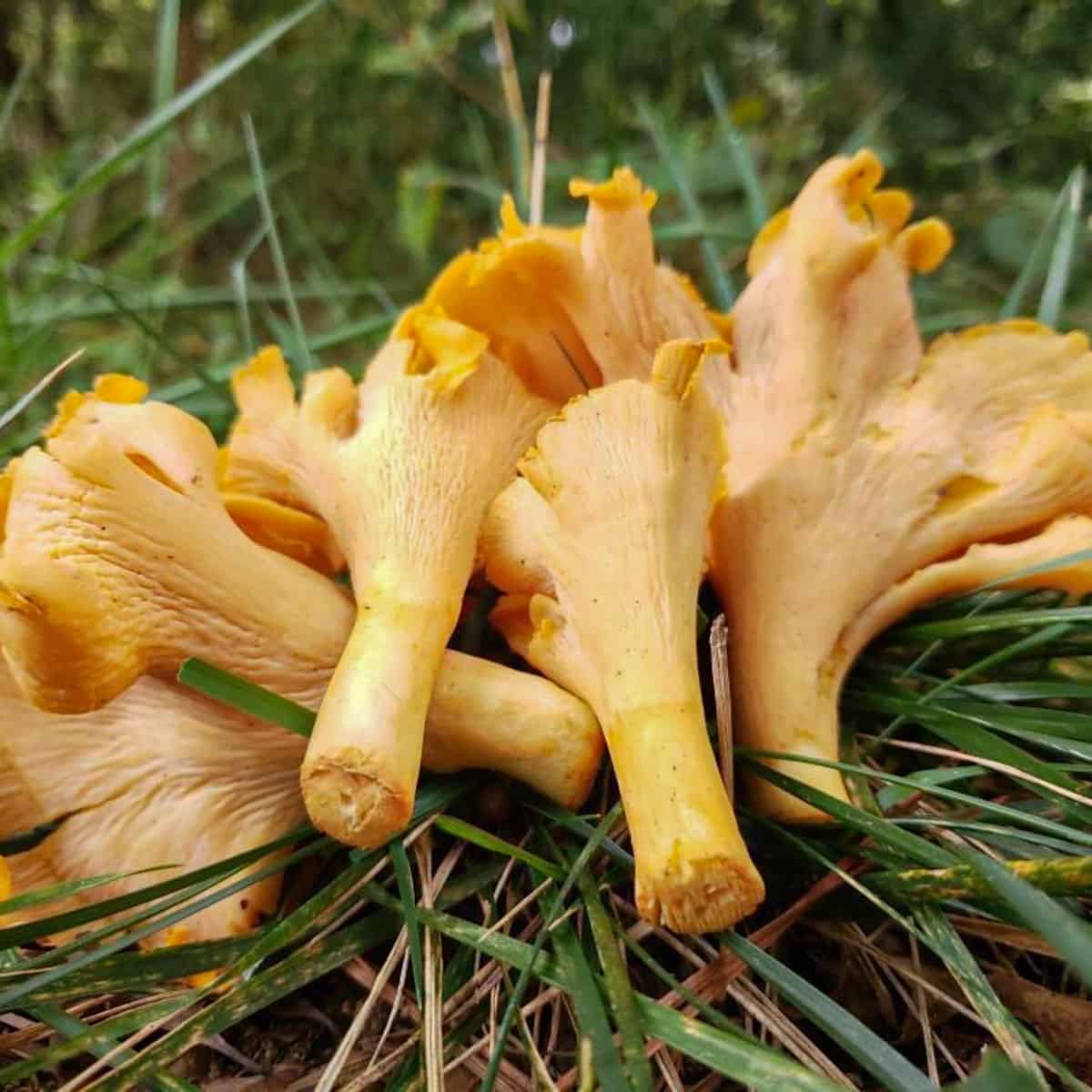
California Chanterelles (Cantharellus californicus)
The largest of the family in North America, Cantharellus californicus grows with live oak and tanoak during the early fall throughout the winter. Besides being notoriously dirty, it has more fruity apricot flavor than C. formosus but isn’t sold commercially. I've had a single mushroom weigh over a pound.
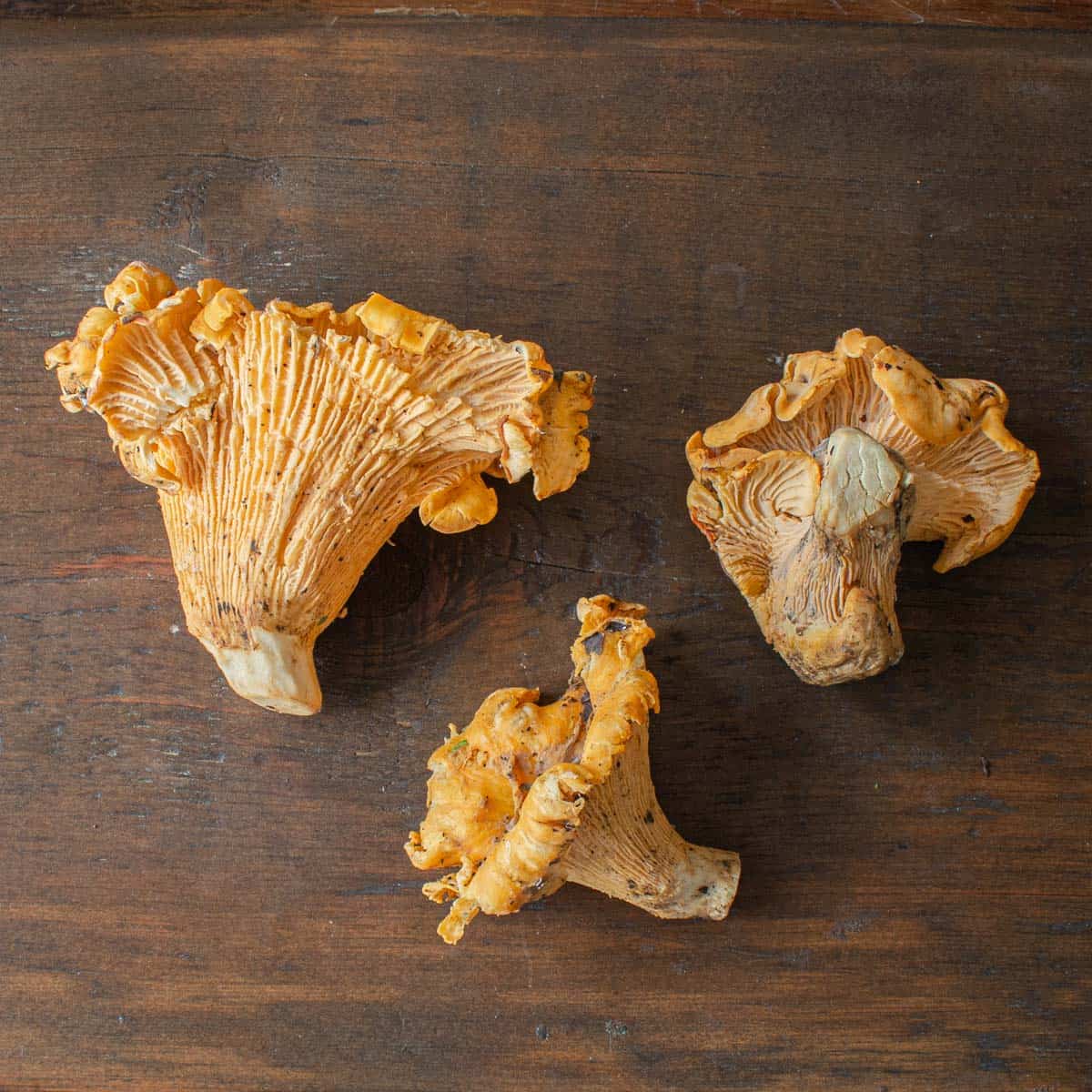
Ghost Chanterelle (Cantharellus phasmatis)
The “ghost” chant is one of the most delicious of all, and probably my personal favorite. Found in the Midwest growing with red and white oak during the summer in Minnesota and Wisconsin. It’s firm, white stem turning egg yellow at the cap, and rich apricot taste are one of the best.
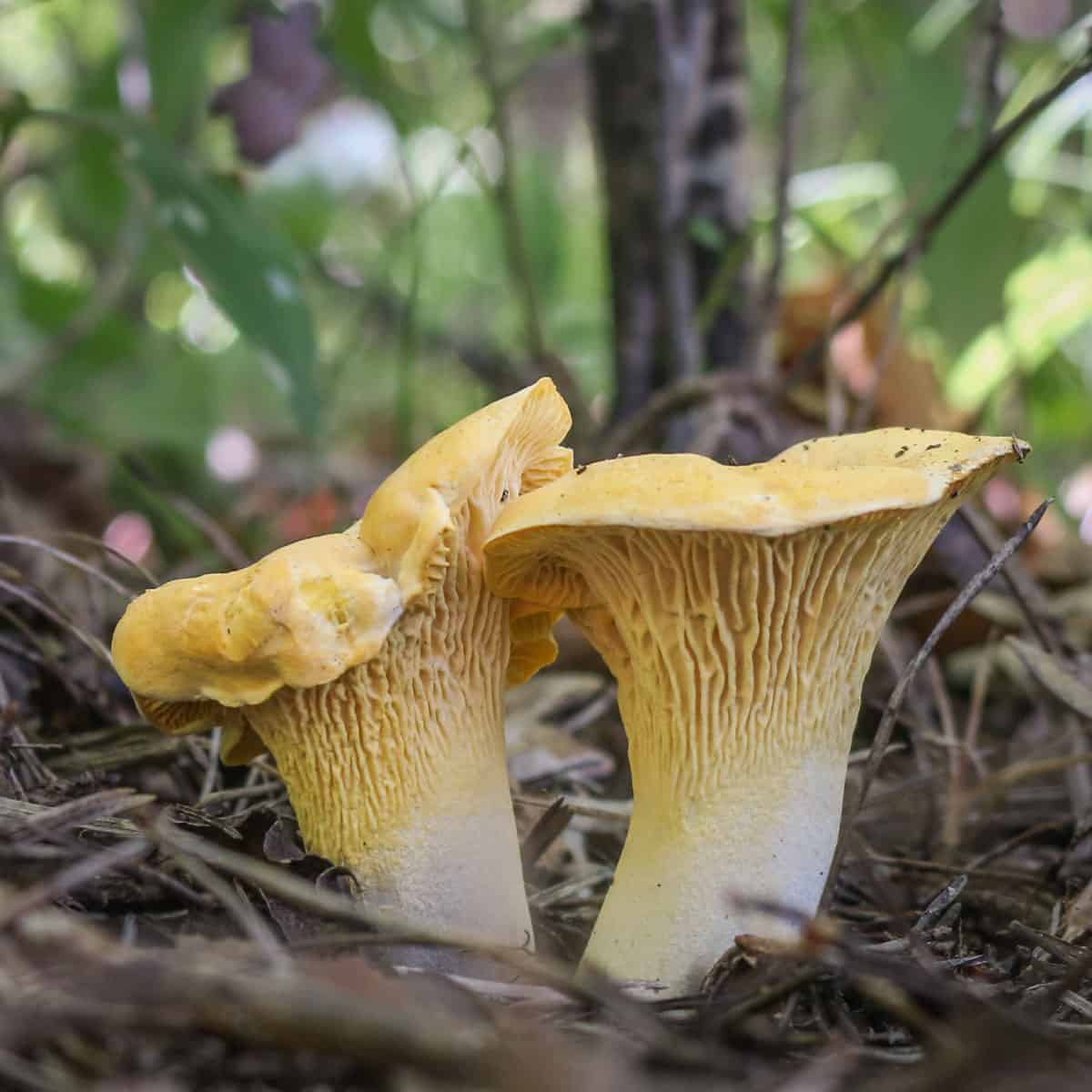
Cantharellus flavus
A smaller, more delicate golden chant that enjoys the same habitat as C. phasmatis and grow in the same area. The stem is yellow from top to bottom. They're usually smaller with a funnel shape post maturity and are often beset by bugs. They're also more fragile than most of their cousins, but have a good flavor.
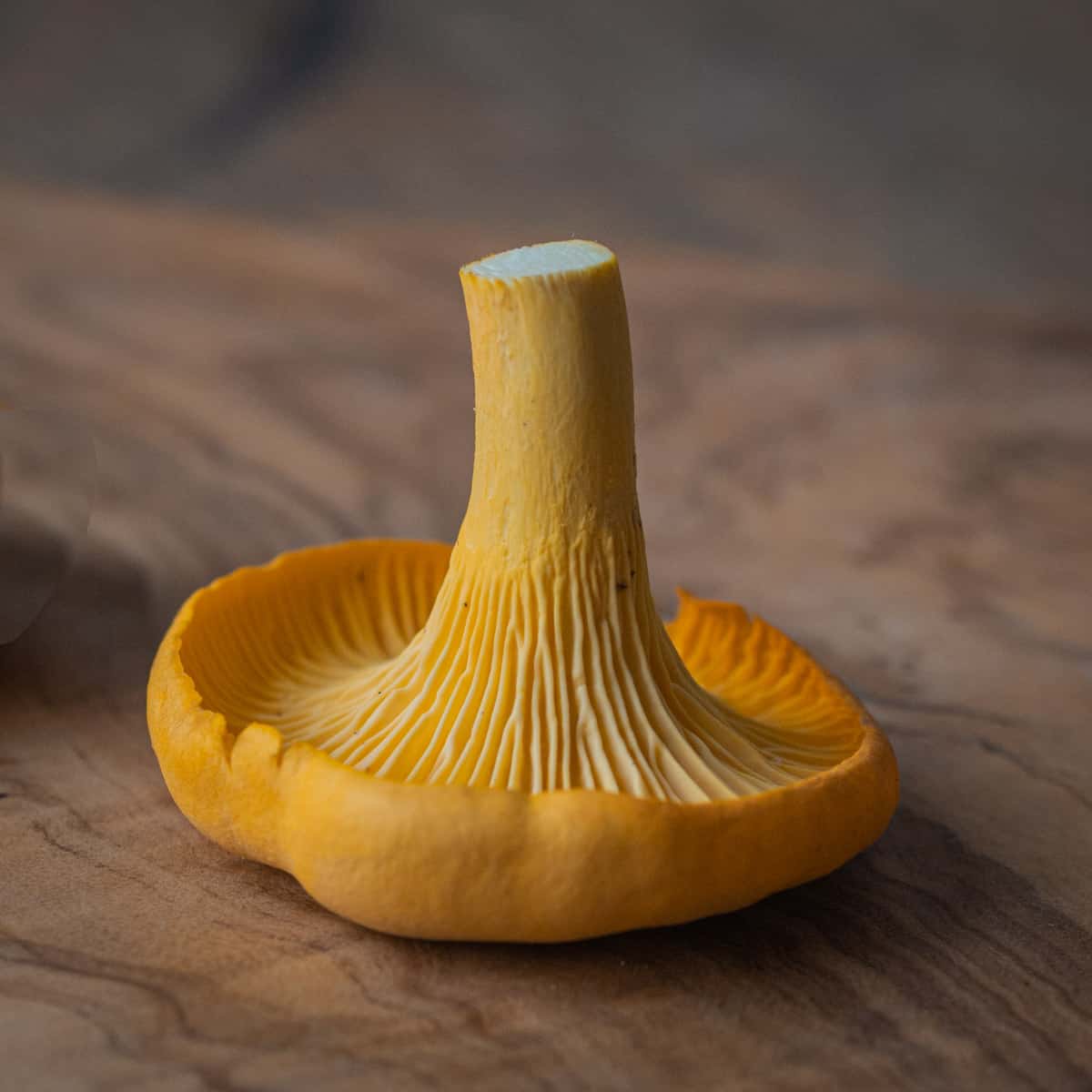
White Chanterelles
could be one of a few different species depending on where you are. True white cantharellus (Cantharellus subalbidus) are a distinct, pure white species. But, many varieties also make a-typical, albino variations that can be confused with them. Albino and white chanterelles have the least apricot aroma of all I've had, but still retain a great flavor.
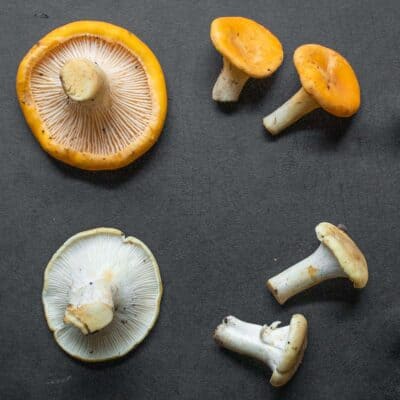
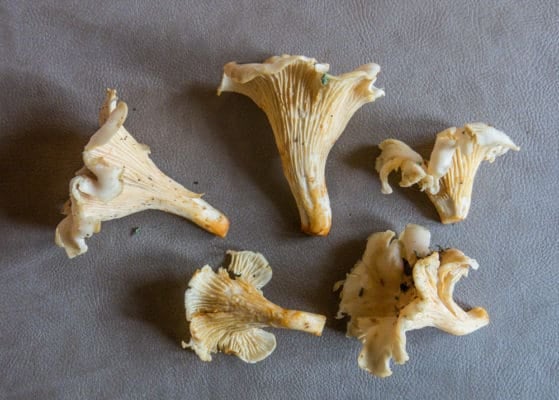
Other species of note include Cantharellus roseocanus of the Rocky Mountains with its pink cap and kaleidoscope of colors, as well a C. chicagoensis (another newly-named species.)
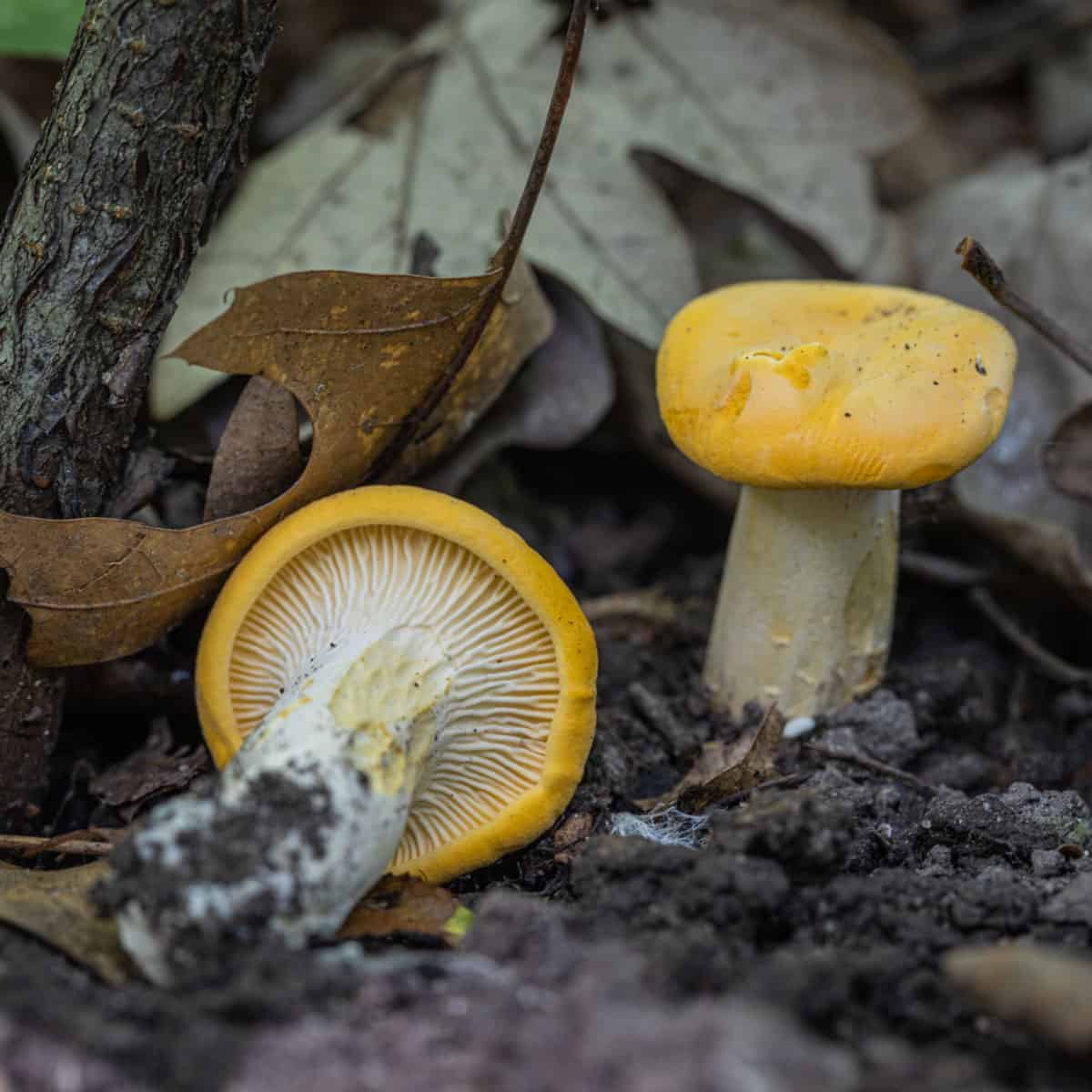
Chanterelle Mushroom Identification
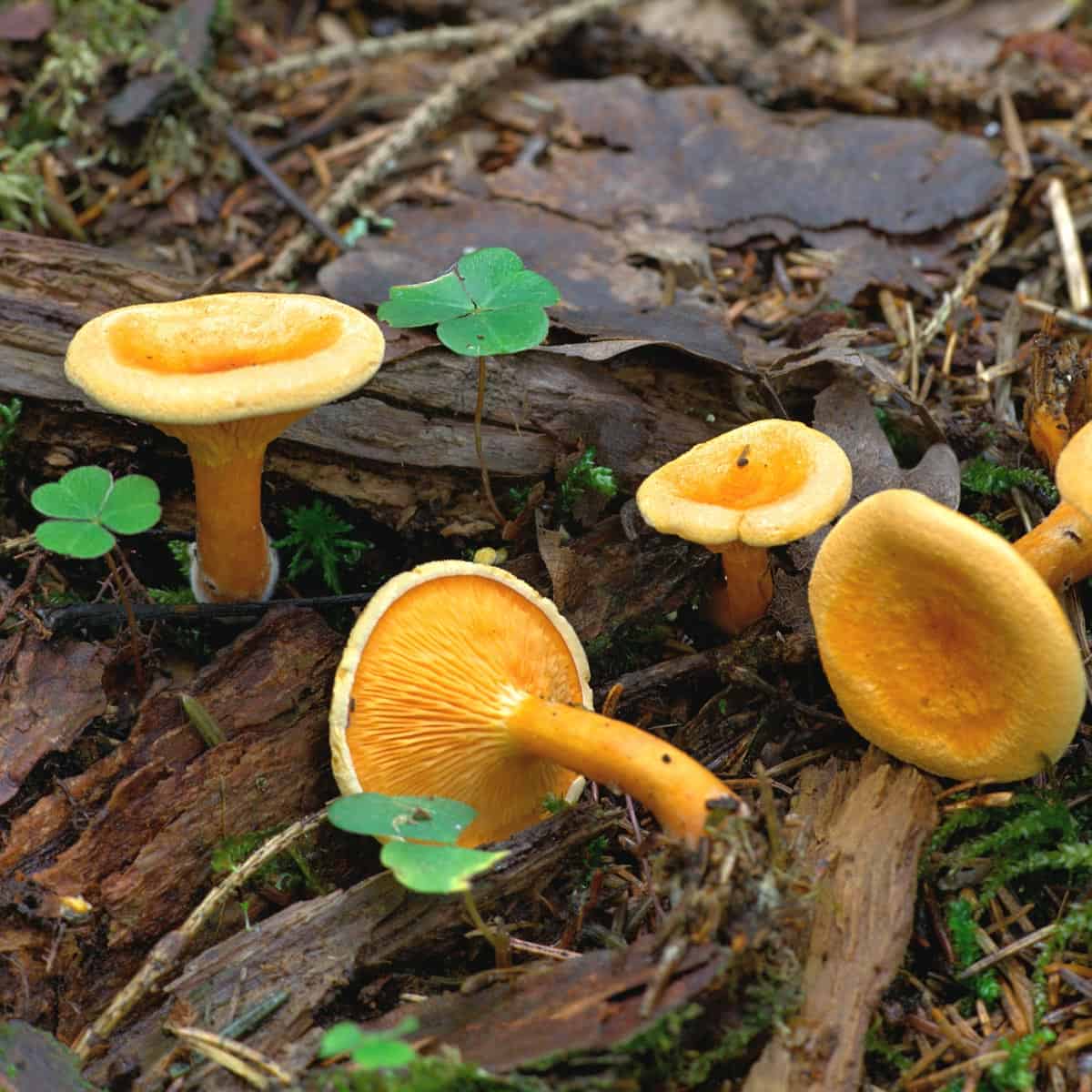
These mushrooms are easy to identify after you know them. Unfortunately they are a gourmet mushroom with poisonous look alikes, so you do need to do your research. Here’s a few helpful tips on identifying them.
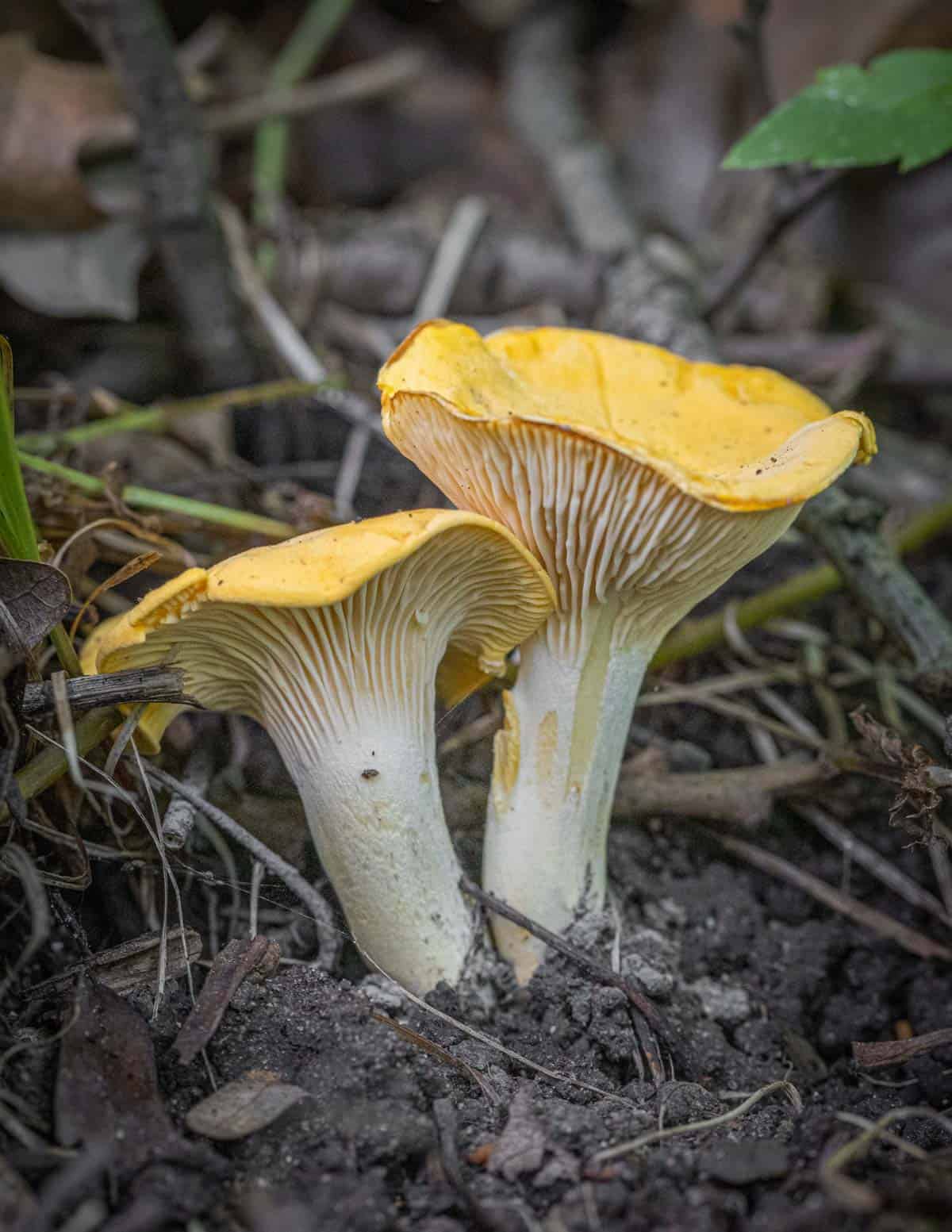
- The fruiting body often has a distinct funnel shape to it.
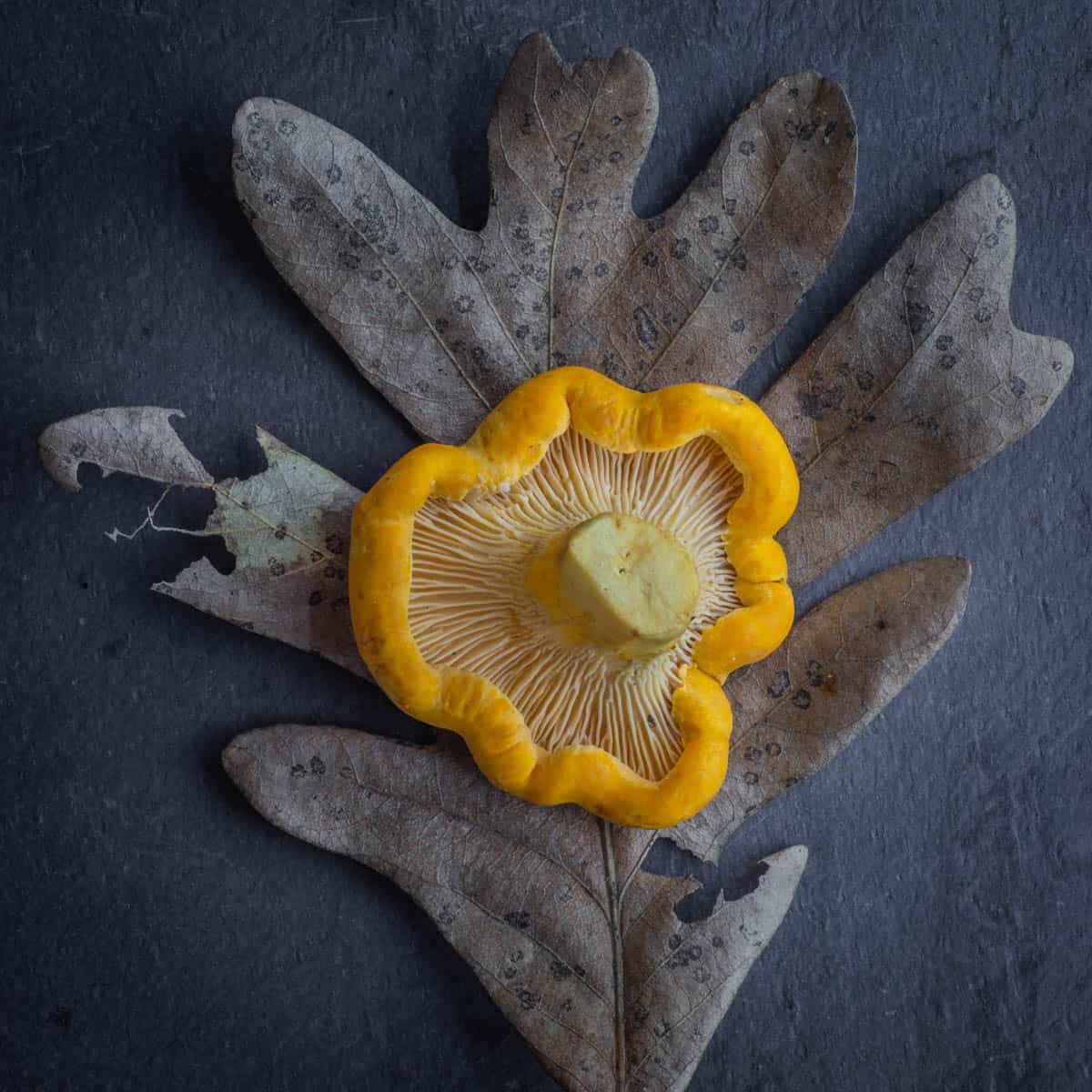
- True chanterelles have false gills or veins under the cap. They will never have true veins.
- Growing directly from the ground-never from wood.
- Typically, but not always, grow singularly, and not clustered.
- The cap is described as having an “egg-yellow” color, but can appear bright orange if it’s rained recently, or if it’s been dry.
- Have an unmistakable, fruity apricot aroma that’s most intense when fresh. Refrigeration mutes their smell.
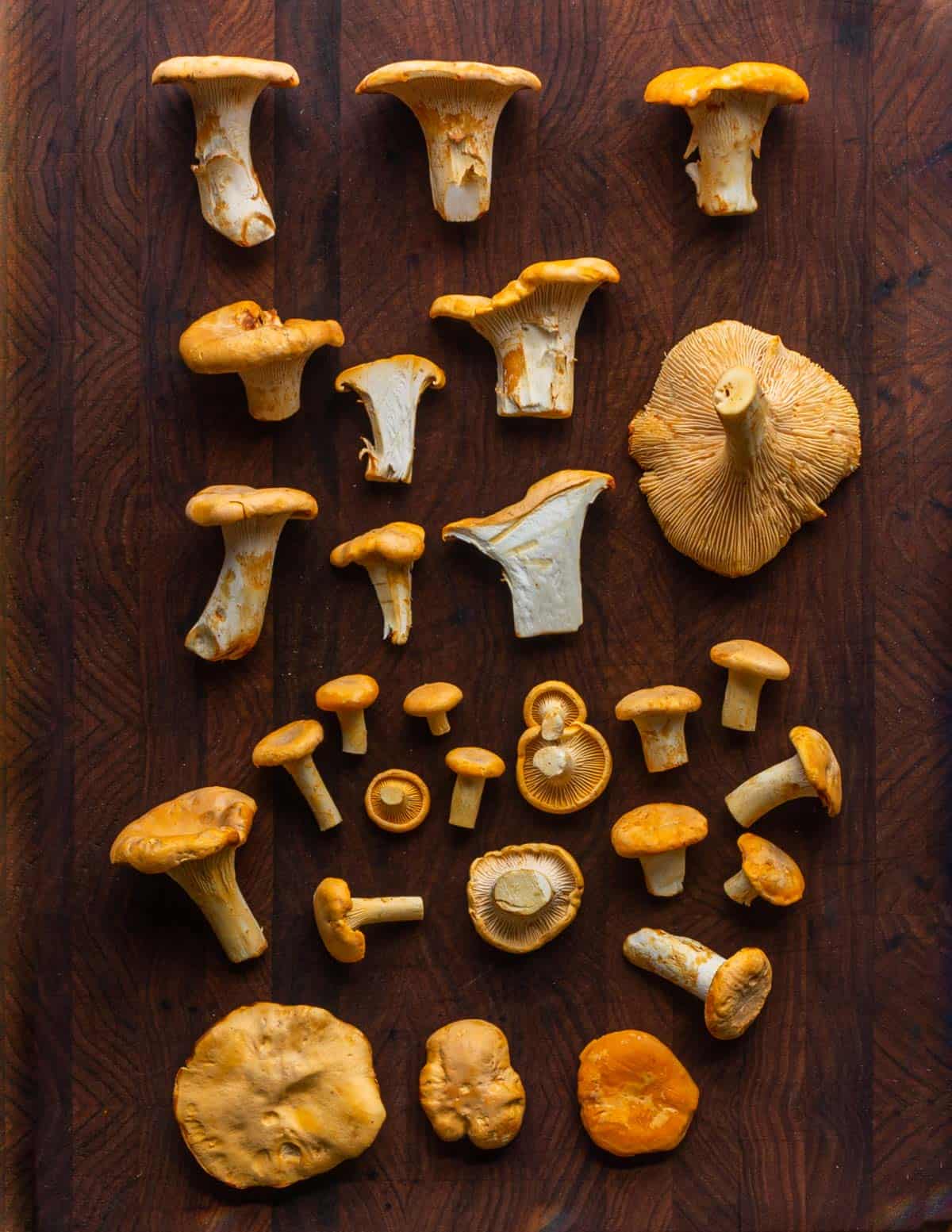
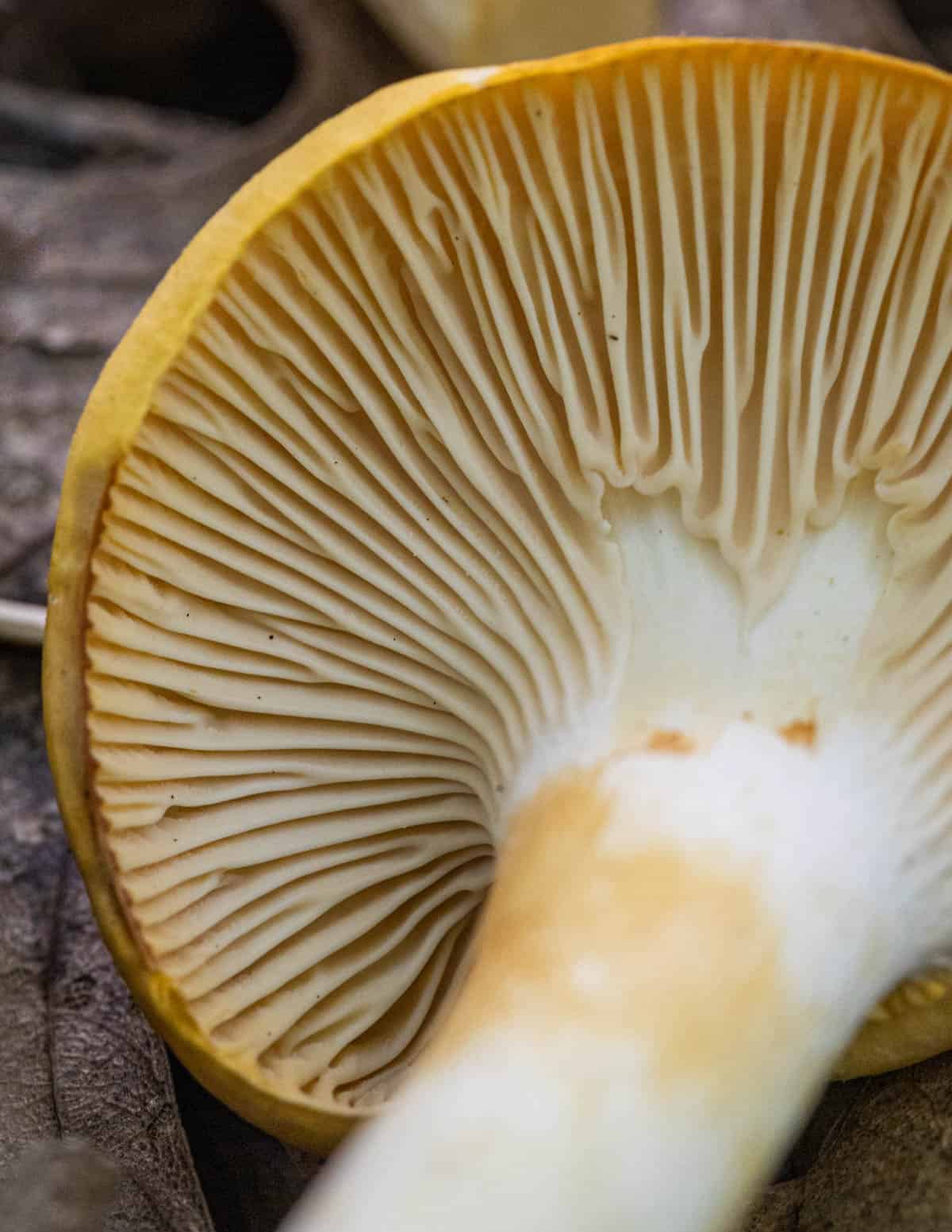
Chanterelle Mushroom Look Alikes
Chanterelles are a delicious, gourmet mushroom with a few poisonous look alikes. Don't let them scare you, but do be aware of them. Here's the three big ones to look for.
Jack O'Lantern (Omphalotus illudens and others
The most common chanterelle look alike. They're toxic and or poisonous. Thankfully, they’re easy to identify as they are saprobic and infect or decompose trees and grow directly from wood, where cantharellus are mycorrhizal, growing in harmony from trees directly on the ground.
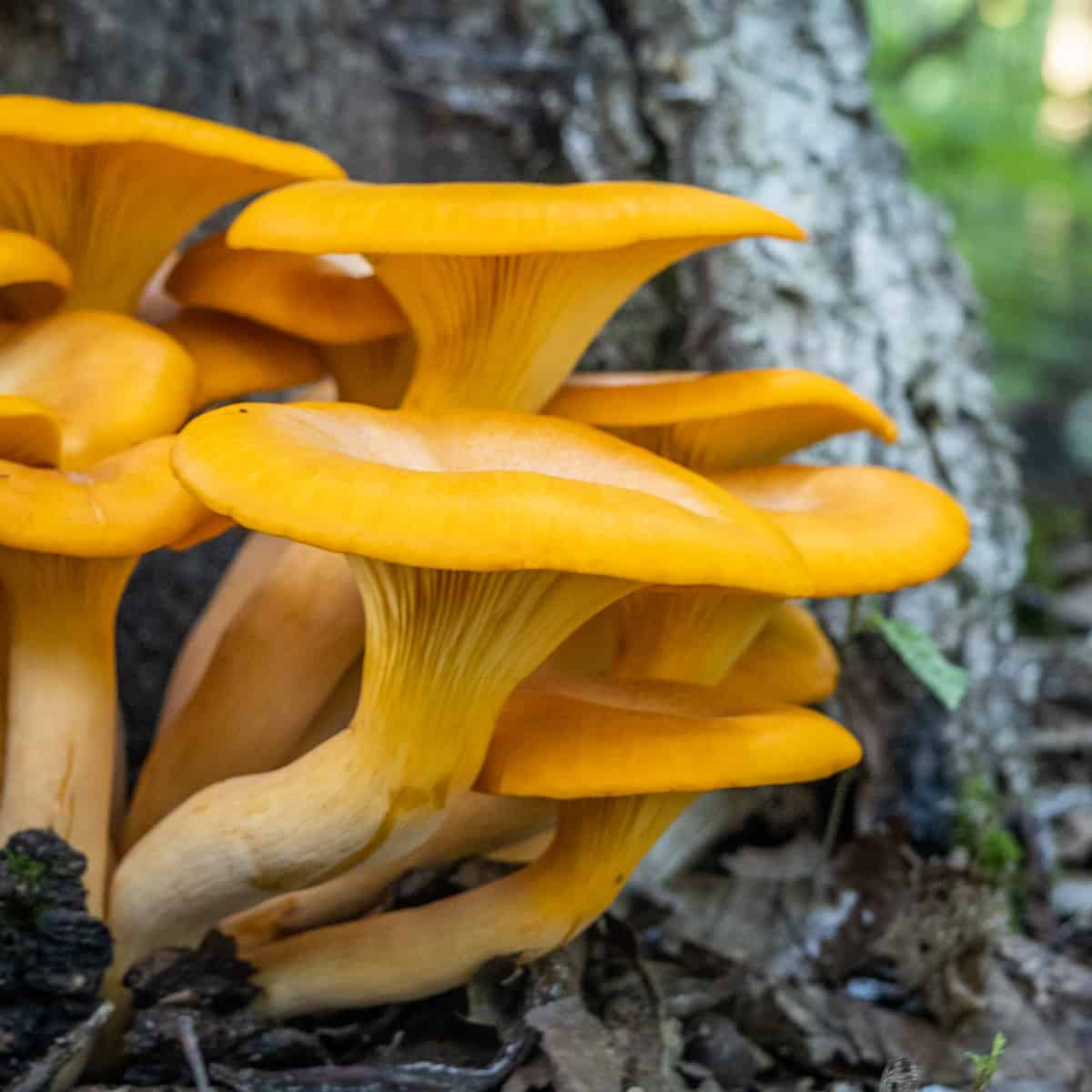
Jack O’lanterns also have true gills and are usually larger, lacking an apricot aroma. The flesh is deep orange throughout when cut, and they also often grow in large clusters from a central stalk, instead of singularly like most true chantrelle mushrooms.
Wooly or Scaly Chanterelle (Turbinellus floccosus)
Formerly known as Gomphus floccosus, these aren't as dangerous as the jack o lantern, but it will still make many people sick. Unlike Jack O’lanterns, this look alike does have false gills.
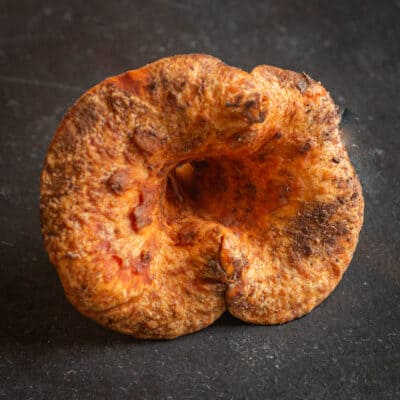
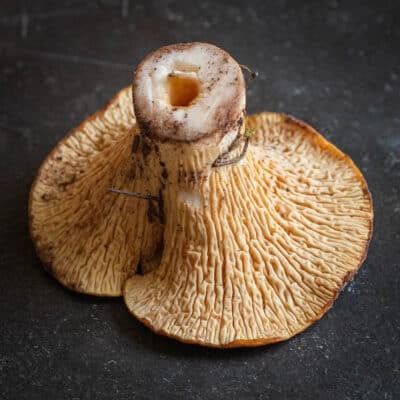
These grow with coniferous trees and are easy to separate from the golden chanterelles by looking at the color of the cap, which is often deep orange or brick colored. They also don’t have a noticeably defined stem, with the whole mushroom appearing quite thick. Some people peel and cook them, but I don’t recommend it.
False Chanterelle (Hygrophoropsis Aurantiaca)
Also a mushroom called false chanterelle, these are easy to separate from true chants as they have gills, that don’t fork like the false gills of the real thing. They’re also brittle, and lack the fruity aroma. They’re mildly toxic and can cause gastro-intestinal distress.
Similar Edible Mushrooms
Besides golden chants, there are many others to find and enjoy. Most are either closely related, or were assumed to be close cousins at one point in time. All are delicious.
- Black Trumpet Mushrooms
- Red Chanterelles
- Hedgehog Mushrooms
- Winter or Yellowfoot Chanterelles
- Pig Ear Mushrooms (Gomphus clavatus)
- Black and Blue Chanterelles (Polyozellus atrolazulinus)
Chanterelle Season
Where I forage in Minnesota and Wisconsin, as well as around the Midwest, the season starts in Mid-July and goes through August. In Pacific Northwest, the season starts later, around November, and can last through April. They love oaks, especially burr oak, and red oak in the Midwest.
How to Harvest Chanterelles
The most important thing is to harvest clean mushrooms before putting them in your basket. Remove the mushroom from the ground by cutting or pulling, then trim the dirt from the stems. Inspect mushrooms as you pick for bug holes, cutting up until you don't see any tunneling. Since they grow close to the ground, they can often be very dirty. Dirty mushrooms will be hard to clean and should be left in the woods to spread their spores.
How to Clean Chanterelle Mushrooms
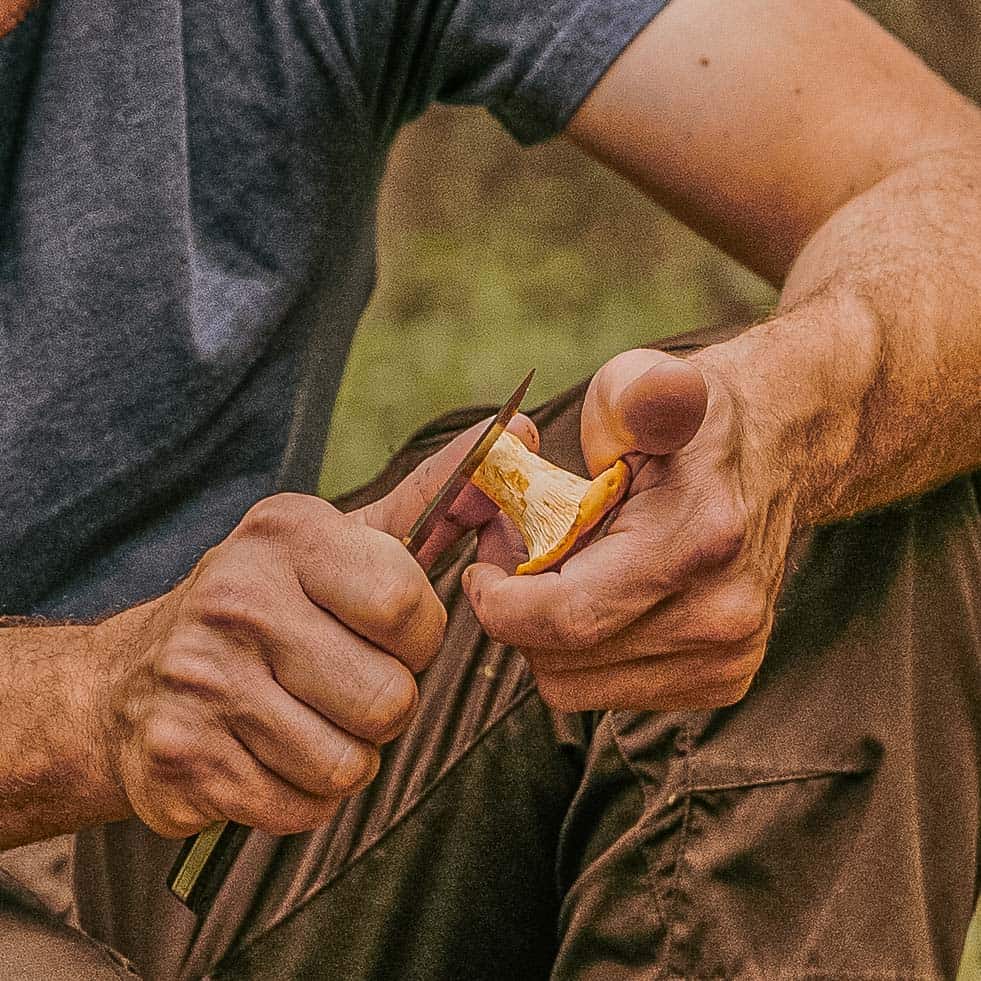
Full a sink with cool water and, working one at a time, swish the mushrooms in the water and inspect each one for dirt and leaf litter. Use the tip of a paring knife to spot-treat dirty areas, scraping off the false gills as needed with the tip of the knife, and swishing them in water again.

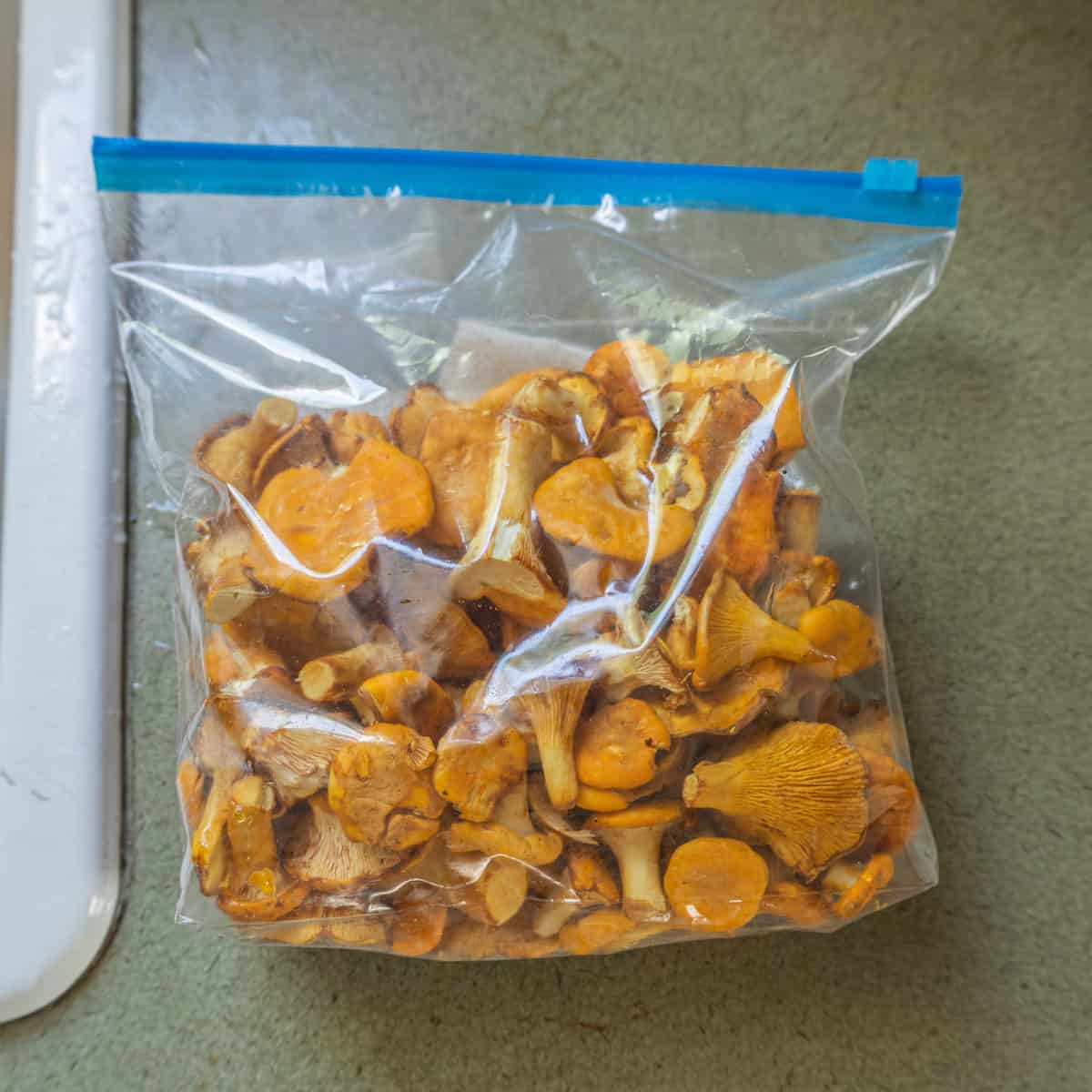
To store chanterelles, put the cleaned mushrooms on a paper towel to drain for a few minutes, then store in a Zip Loc bag in the fridge with a clean paper towel. The mushrooms will last for a week. If you store them in a paper bag they'll dehydrate and dry out.
How to Cook Chanterelle Mushrooms
Chanterelles taste like firm mushrooms with a hint of apricot aroma, depending on how they're cooked. The classic French way to cook them is simply trimmed and sauteed whole in a pan. The small buttons with in-rolled caps are the most prized, and will cost up to $40/lb fresh.
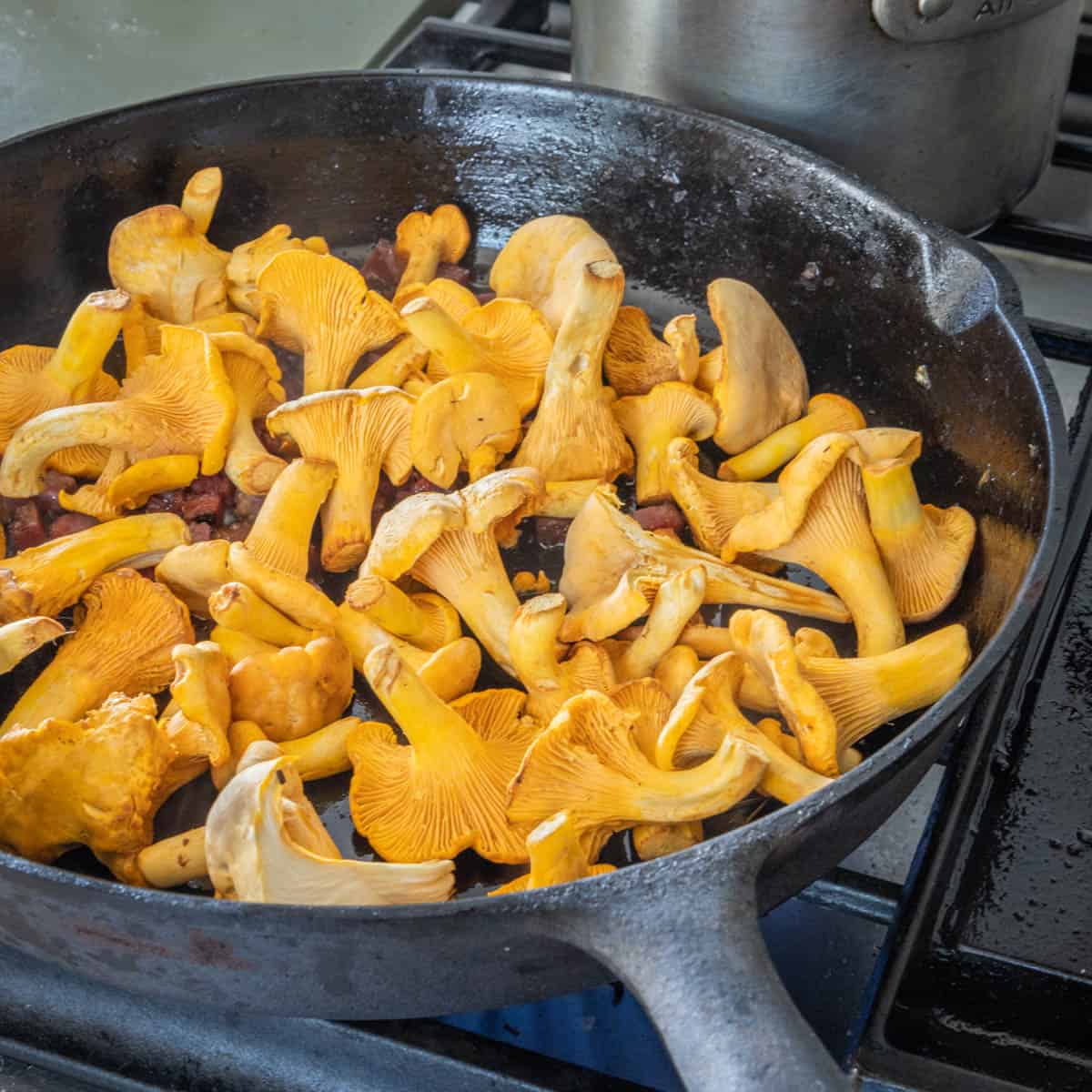
Small buttons or bouchon mushrooms are considered the finest, make the best pickles, and are best cooked whole to preserve their firm, chewy texture, which can be squeaky like a cheese curd.


If your mushrooms are older or larger, they can be cut into pieces and sauteed or stewed, made into mushroom duxelles, used in soup, or any place you would use mushrooms. Like most mushrooms, they love cream and butter. They have a special love of sweet corn, and the sweetness of both ingredients together is a summer treat.
CONNECT
250 West Road
Canterbury, NH 03224
603.742.4084


Brookford Farm’s mission is to grow delicious, honest food that honors the power of nature.